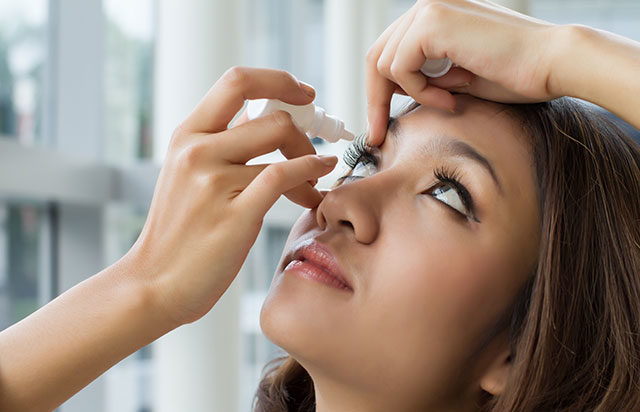
How it works
Atropine (in very low concentrations) gently reduces the eye’s signalling that drives excessive growth in childhood. While the exact mechanism is still being researched, blocking certain muscarinic receptors appears to help slow the structural changes that underlie myopia progression.
Low-dose formulations (commonly between 0.01% and 0.05%) are chosen to balance treatment effect with minimal side effects. Your clinician will recommend a concentration tailored to your child’s prescription, age and progression risk.
Who is it for?
- Children with progressing myopia (increasing prescription over time).
- Families wanting a non-surgical, at-home option alongside glasses or contacts.
- Children who may benefit from combination therapy (e.g., with MiYOSMART, MiSight®, or Ortho-K), as advised by the clinician.
Suitability is assessed individually after a comprehensive eye examination.
Technology & efficacy
Multiple clinical trials show that low-dose atropine can slow myopia progression compared with standard care. The effect tends to be dose-dependent: slightly higher low doses (e.g., 0.05%) may offer more control than very low doses (e.g., 0.01%) for some children, while still being well tolerated. Your optometrist will discuss the most appropriate starting concentration and whether to adjust over time.
Your child’s response is monitored over months to years using regular prescription checks and clinical reviews.
What to expect
- Dosing: One drop in each eye nightly at bedtime (unless your clinician advises otherwise).
- Duration: Typically multi-year with regular reviews; treatment may be tapered to minimise rebound when stopping.
- Follow-ups: Usually every 6–12 months to assess progression, comfort and side effects.
Side effects & safety
- Light sensitivity (slightly larger pupils) — often mild at low doses; photochromic lenses or sunglasses can help outdoors.
- Near blur (reduced focusing at close range) — uncommon at very low doses; your clinician may adjust the dose or add a near assist if needed.
- Allergy/irritation — rare; report any redness, stinging or persistent discomfort.
Always follow the label. Some compounded formulations may have specific storage instructions (e.g., refrigeration) and shorter shelf-life.
Combination options & lifestyle tips
- Atropine can be used alone or with optical strategies like MiYOSMART, MiSight®, or Ortho-K when clinically indicated.
- Support good visual habits: encourage daily outdoor time, balanced screen use, and appropriate working distances for near tasks.
Frequently asked questions
Is low-dose atropine safe?
When prescribed and monitored by an eye care professional, low-dose atropine is considered safe for children. Side effects at these concentrations are usually mild and manageable.
What age is best to start?
Earlier intervention often yields better long-term outcomes. Suitability depends on age, prescription, rate of change and eye health.
Practical tips
- Wash hands before instilling drops. Avoid touching the bottle tip to the eye or lashes.
- If your child wears contact lenses, instil the drop after lenses are removed at night (unless advised otherwise).
- Keep follow-up appointments to track effectiveness and adjust the plan if needed.
This information is general and not a substitute for personalised clinical advice.